Tuesday, June 23, 2020

When is enough, enough?


                                 Social Media Graphics - Black Lives Matter


Both videos for this weeks assignment were extremely powerful, not only because of the content and its importance for the time period, but also for how it relates to the events happening in present day and how they connect to the readings/videos throughout this class.

"Mighty Times: The Children's March" produced and directed by Robert Hudson and Bobby Houston walks you through events happening in Birmingham, Alabama in 1963.  MLK one of the driving forces for the Civil Rights Movement to end segregation.  The inequality that segregation allows is detrimental to the African American community just as it was shown in  "The Indian Boarding Schools" to the Native American community.  In the beginning of this movement there weren't many volunteers to stand up, certainly not enough to make a difference.  The lack of volunteers had a direct correlation to the fear of retaliation from the white families that employed them.  This retaliation could be anything from losing their job, losing their house, or having their car repossessed.   These set backs and less opportunity for employment for African Americans or those in poverty are highlighted in two other course materials, "In Sickness and In Wealth" and "The Full Cost of Incarceration in the US".  The systematic repression evident and the long lasting effects detrimental.  The youth stood up and volunteered by the thousands, "D-day" was planned in secret through coded messages given on the radio.  The brave and determined children showed up multiple days until white people agreed to integrate. Some walking 18 miles, showing up in their bathing suits knowing the hose was going to be turned on them, going to jail more than once

"Stay Woke: The Black Lives Matter Movement Documentary"  directed and produced by Laurens Grant shows a timeline of the #blacklivesmatter movement.  The timeline starts with February 26, 2012, the day that Trayvon Martin was murdered and his killer's 'not guilty' verdict.  Twitter, a social media platform, and the hashtag for Black Lives Matter started and was a quick way for people to share information.
"Social media extended the reach of activists.  It both allowed people in the far away localities to have a minute by minute view of what was continuing to happen in Fergusson and it also meant that activists could communicate immediately about where demonstrations were, where protests were.  It just accelerated the rate of activism surrounding this case" (10:59) "Stay Woke"
Through this social media platform, people from around the world were able to communicate quickly and efficiently.  Some people from Arab Spring were teaching and coaching activists how to deal with tear gas and injuries during protests.  Protests showing support for Black Lives Matter after George Floyd's death happening on four different continents. Journalists from these areas came together to write this report showing insight to what the protests looked like in their country.  Social media was also a place for celebrities to show support.  Their support was also shown in other ways; Lebron James wears a shirt that says "I can't breathe" bringing awareness to Eric Garner, the St. Louis Rams coming out of the tunnel before their football game in the "Hands up don't shoot pose" brining awareness to Michael Brown, John Legend speaking about injustices during an award ceremony.  While any support helps, an immense influence is coming from the younger activists.
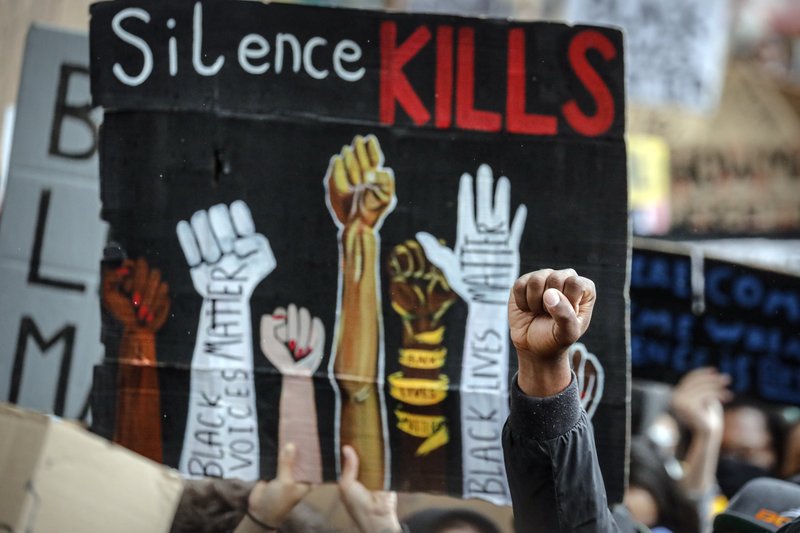


Empowered youth in both videos as well as a previous video we watched "Precious Knowledge"  show that they can peacefully protest to get their voices heard and to stand for what they believe.  All three videos showed youth walking with signs raised and chanting or singing songs.  Each varying in the level of success for change but in all three making sure that their voices were heard.

The youth were able to make a change in both time periods and are continuing to bring awareness now.  It shows the influence the youth have when educated and empowered.  As adults, educators, and parents we need to make sure that the youth "stay woke".  It makes me happy and hopeful that in both cases the youth stepped up to the plate but angered that history is repeating itself in this way.   It has me wondering, how we can try to make sure that this is the last time that there needs to be protests against racism and in support for equality? When is enough, enough?

Monday, June 15, 2020

Final Assignment Proposal

For the final assignment for this course I have chosen option 3.   More specifically I will be looking into the English-Only policies that are still enforced in todays society.  A critical analysis of English-only policies is something that I think that would deepen my understanding of why they are put into place and the affects that this policy has on bilinguals.
The English-Only Policy is in place in many school districts and workplaces throughout this country.  This policy enforces that the only language that is able to be used is English.  In some situations there are consequences for speaking another language.
These types of policies evidently show who has the power and the inequality that it creates in the classroom.  While this is a policy that isn't written  and displayed in the school district I work in, it is still enforced by some educators and administrators.  Conducting this research will help me become more educated and share my findings with others in my district to help reverse this policy.

A few of the readings I will be looking into are listed below. More readings may be included to further enforce my ideas.

The Impact of English-Only Instructional Policies on English Learners By Patricia Gándara (2012)

'English-Only' Laws in Education on Verge of Extinction by Corey Mitchell (2019)

'A HUGE SHIFT': HOW CALIFORNIA IS MAKING UP FOR 20 YEARS OF ENGLISH-ONLY EDUCATION by Sarah Jackson (2019)

Are "English-only" schools the best way to learn?  by Jennifer Guerra (2014)


                                                   Examples of Bias - Bilingual Special Education EDTE 302
                                                                       Why?


"DISability"

"Examined" is a short video featuring Sunaura Taylor and Judith Butler going for a walk on the streets in San Francisco while having conversations  around accessibility, disability, and interdependency.  Sunaura is a person that was born with arthrogyposis and is now confined to a wheelchair.  She specifically moved to San Francisco because of the accessibility of the area.  Some aspects of every day life like curb cuts on sidewalks, businesses being accessible, and accessibility to public transportation make living much easier.  Even walking down the street where I live in Pawtucket it is obvious that the sidewalks are in need of desperate repair in order to serve this population.  Many sidewalks are not paved or are impassable because of a structural blockage like a telephone pole or tree.  These things are something that are necessary for people to be able to have physical access to the community.


Creating Curb Cuts | Encore


Disability Discrimination Images, Stock Photos & Vectors ...

This physical accessibility then turns into social acceptability.  Sunaura even said that since these things are in place to help it be physical assessable that "it also leads to a social acceptability, that somehow because - because there's physical access, there're simply more disabled people out and about in the world.  And so people have learned how to interact with them and are used to them in this certain way. And so the physical access actually lead to, um, a social access, an acceptance" (2:13). There isn't much education on people that are different from you until you encounter them in some portion of your life.  I think that this exposure and learning about other people, whether they are disabled or not, can help with the issue of interdependency addressed at the end of the video.  Too many people do not help simply because they do not know how to help or are fearful of making things worse despite good intentions.

Gesture Hand Stop And Disabled In A Wheelchair Looking For A ...Sunaura became aware of disability as a political issue in her early 20's through this, she learned that in disability studies they have a distinction between disability and impairment.  The CDC's definition of disability and impairment can be found here.  "So impairment would be my- my body, my embodiment right now. The fact that I was born with arthrogyposis, which affects- what the medical world has labeled as arthrogyposis ... and then there's disability which is basically the - the social repression of disabled people" (4:31).  And this repression could be in the form of limited housing availabilities, they do not have career opportunities, and being socially isolated.


If you break down the word "disability" the prefix 'dis' meaning not, opposite, or away and 'able' having the definition of having the power, skills, means, or opportunity to do something the word 'disability' really has a wider umbrella then just those that are physically or mentally handicapped.   This idea of disability is addressed in the beginning of another video I watched On Equality - Angela Davis and Judith Butler in Conversation. Judith Butler states
"Equality is a question of equal treatment and equal opportunity but also having lives that are regarded as being equal worth to all other lives and being able to exercise bodily freedoms that includes.  I mean for people that are in chairs or who have other kinds of disabilities, access, and movement, but also let's think about it, there are a lot of people who can't move on the street. I mean who has the freedom to move in safety without being shot, without being harassed, without finding an impediment with a curb stop.  These issues are linked and I just want to underscore that the ability to move and to have the technology and the infrastructure that lets people move and assemble and participate and enter into space and transverse the public sphere is part of our freedom and is also a place where we find radical inequality" (6:21)
To which Angela even replies " I totally appreciate the way in which you so eloquently allowed us to think about the degree to which issues of ability and disability are interwoven into all issues of inequality and injustice" (7:42).  This idea that a disability is not being able to do something, affects many citizens in the United States.  It reminds me of the video that we watched at the beginning of this course "In Sickness and in Wealth".  Simply being able to, or not being able to accomplish a task because of outside forces like the environment you live in and the resources available to you brings us back to this idea of interdependency.  "Do we or do we not live in a world where we assist each other? Do we or do we not help each other with basic needs?" 'Examined' (13:15) And aren't those two very good questions...


Tuesday, June 9, 2020

"I Am Not Your Negro"


"I Am Not Your Negro" is an Oscar-nominated documentary written by James Baldwin and directed by Raoul Peck.  This film delves into the institutional racism that is still prevalent in today's society using Bladwin's book "Remember the House" and film pieces from when he was a guest on talk shows.  It is impossible to discuss all of the points made and topics brought up in this documentary so I am going to pick three quotes/ ideas that stuck out to me the most throughout this film.  First I would like to say that I found this so overwhelming that I had to "sleep on it" before writing this blog post to try and collect my thoughts to attempt a cohesive blog post.


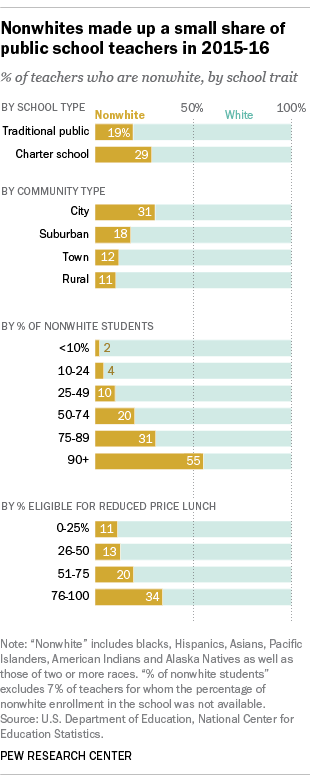
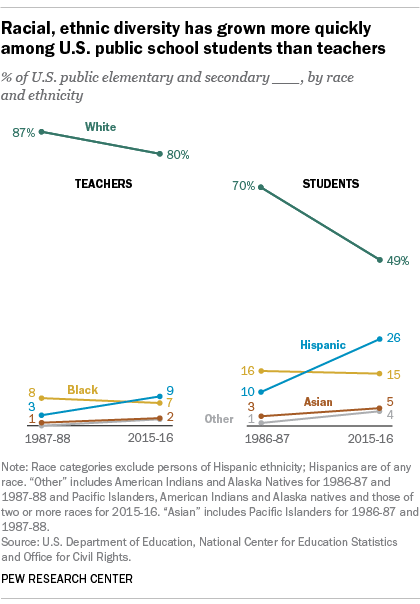
In the beginning of the film Baldwin explains that "In these days, no one resembling my father has yet made an appearance on the American cinema scene... No, thats not entirely true....It seemed to me that they lied about the world I knew, and debased it, and certainly I did not know anybody like them." (13:22). There was, and still is, a disproportionate relationship between the number of minorities in certain roles and the population of those minorities in this country.  And even when they are represented they are with biases (but thats a whole different issue).  The teaching profession is one in which this disproportionate relationship is very evident.  Even though  Baldwin had a white teacher, Bill Miller, who had a positive impact on his life and is  the reason he "never really managed to hate white people", it still brings forward the reality that America's teachers are far less culturally and ethnically diverse than their students.  While the number of minorities choosing this profession is increasing it does not even come close to mirroring the student population. How is this affecting the minority students? Why are there not as many minorities going into the teacher profession? How can we change that?
Racial, ethnic diversity has grown more quickly among U.S. public school students than teachers

This chart to the left reminds me of the research concluded about the percentage of minorities in jails and prisons around the country.  When looking at the charts for the Prison Policy Initiative especially the chart depicting the racial and ethnic disparities in prisons and jails in Rhode Island you are able to see the glaring differences.

Why are these percentages never proportionate or in favor of minorities?


Some of these differences can be attributed to the racism still in this country, specifically from white people.  " I began to suspect that white people did not act as they did because they were white, but for some other reason" (12:38). If it not for race then why? Baldwin shares a little in this quote here.

"It is impossible to accept the premise of the story, a premise based on the profound American understanding of the nature of the hatred between black and white.  That time is now. The root of the black man's hatred it rage, and he does not so much hate white men as simply wants them out of his way, and more than that, out of his children's way.  The root of the white man's hatred is terror. A bottomless and nameless terror which focuses on this dread figure, an entity which lives only in his mind" (48:05)
Why are white people so afraid of African Americans?  They want justice. They want the same opportunities given to them as are given to white people.  Irrational fears of white America help drive the divide in equality.  When will a sincere change happen in this country?

Sincerity is said to be an American virtue - people can say "I'm sorry" but what does it mean to really be sorry.  "The tragedy is that most of the people who say they care about it do not care.  What they care about is their safety and their profits" (1:20:50). Sincerity in acknowledging the injustices and for be an activist for positive change in this country is going to be an ongoing battle. Through admission to where we are, education on history and how to help, and action we can fight for the change that is needed.
"Not everything that is faced can be changed, but nothing can be changed until it is faced" (1:25:56)

                                        Inequality v. Equality v. Equity v. Justice : southafrica

We do not need equality in this society, we need justice.  People have been fighting the same fight for justice for an absorbent amount of time, from the Civil Rights Movement to Black Lives Matter yet how much change has happened? Why are people still needing to fight for this? We need each person, no matter any identifying characteristics, to have equal opportunity.  So many things are broken so it again brings me back to a question I have previously asked, where do we start? Where do we go from here?

"The future of the Negro in this country is precisely as bright or as dark as the future of the country.  It is entirely up to the American people and not representatives. It is entirely up to the American people whether or not they are going to face and deal with and embrace the stranger they have maligned so long" (1:28:13)

I feel like this post has more questions than answers but I strive to educate myself a little more each day to help positive change happen.

Monday, June 1, 2020

The Harsh Reality of Deculturalization

All three articles that were read for today's class were heavily rooted in the deculturalization of minorities in American history and the harsh realities of how it affects them.  The first article I read Deculturalization and the Struggle for Equality, 4th Edition by Joel Spring had so many points that stood out to me that it was hard to pick which to dive a little deeper into.  The first quote that stood out was "Believing that Anglo-American culture was the superior culture and the only culture that would support republican and democratic institutions, educators forbade speaking of non-English languages, particularly Spanish and Native American tongues, and forced students to learn an Anglo-American centered curriculum" (Spring, pg 3) While this is written about our past it is not that different from today's reality.  Too many school districts approach the teaching of ESL students using subtractive bilingualism. While not utilizing an individuals native language (L1) an educator is missing out on many teaching opportunities not only for that individual student but for the others in that classroom.  Subtractive bilingualism can have many negative effects not only on their learning but on their self-esteem and motivation.  Limiting their use of their L1 essentially silences them and inhibits meaningful connection building.  Embracing a student's culture and incorporating it into a classroom empowers them to get involved.

"The Naturalization Act excluded from citizenship all nonwhites, including Indians.  Indians were considered domestic foreigners and, therefore, ineligible for citizenship" (Spring, pg 7) Breifly, can we talk about how insane this sounds? The two words domestic and foreigner even contradict each other...Finding excuses to segregate a culture that is different from the English culture. Wouldn't the English people be the foreigners?


The second article, The Indian Boarding Schools by Michele Bollinger really brings to light the mistreatment of Indians in  school that were run by US government officials or Christian missionaries.  During the time that these were open  "generations of Indian children were traumatized by a number of barbaric practices employed by school officials; separation from family and community, child labor, physical torment, and sexual abuse.  At the heart of these schools was a barbaric form of racism - one aimed to strip American Indians of any semblance of cultural identity, tradition, and spirituality" (Bollinger, pg 70)  This brings me back to the point I made earlier about valuing each student's culture.  While the education system today isn't using these barbaric practices I believe that there isn't enough being done to help facilitate the learning of the different cultures that makeup our state.  Learning about the different cultures will help unify our community by sharing and acknowledging our commonalities. 

A quote in an article from The Guardian called Native Americans being left ouf of US coronavirus data and labelled as 'other' by Rebecca Nagle highlights the long-lasting effects of racism. A social demographer Desi Rodriguez-Lonebear (Cheyenne) said  "Health disparities are nice words for systematic racism...it's the residual effects of the founding of this country".  The health effects linked to "In Sickness and In Wealth", minorities often have a lower life expectancy because of stress caused due to racism. 
This quote also reminds me of "Thinking About Racial Dispartities in COVID-19 Impacts Through a Science-Informed, Early Childhood Lens" By Jack P. Shonkoff, M.D. and David R. Williams, Ph.D.  This article showed us that the susceptibility is influenced by the environments where we live.  The Guardian article brought to light that "In Navajo Nation, for instance, one in three people so not have access to running water or electricity."  Not having access to running water would prevent these individuals from being able to wash regularly and could  help spread COVID-19 in Indian communities.
Reading this article reminded me of "Prison Policy Initiative" from last week and the disproportional representation of the the different races/ethnicity that are incarcerated compared to their percentage in the community.  The Guardian article states that "In New Mexico, Native Americans make up less than 10% of the population but over one-third of coronavirus cases".  Why are these numbers so disproportional? As a country, we need to do better than this but where do we start?


Monday, May 25, 2020

"In Sickness and in Wealth" the Direct Correlation between Social Status and Life Expectancy

"In Sickness and in Wealth" a 2008 film by filmmaker Larry Adelman is part of a series produced by California Newsreel called "Unnatural Causes".

This film highlights the correlations between socioeconomic status and the health of individuals, specifically in Louisville, Kentucky.  Why is it that there seems to be a connection between someones health and which class they belong to and the racial inequalities?
They show through data that we are "shaped by our social conditions, often even more powerful than our genes" (3:50)  Even though many are brought up to think that health is always a "personal issue" this shows that it is more of a "social issue" than many people believe it to be.  These social issues were defined to be the differences in education, income, housing, and power.  The higher the education and income, the higher the life expectancy.  The issues of housing and power more have to do with how our bodies respond to stressful environments.  These stressful environments can start taking a negative effect at a early age. These negative effects were shown in two different studies showcased in the film.  The first showed how the higher levels of cortisol, the hormone produced by stress, has a negative affect on the arteries in the heart of monkies.  The second study measured the cortisol levels in individuals and then exposed them to a virus to see how their immune system would react.  It was really interesting to see the affects that stress has on the body.  While I can not say that I am surprised to hear this, I was a little taken aback by the gravity of its contribution to our health. This would mean that in actively managing stress levels (to the best of ones ability) we can have a positive impact on our overall health.

As Dr. Troutman says "Part of good public health is empowering communities, and I don't think we should shy away from that.  And empowering communities means creating those conditions where people become empowered and make the changes they need to control their lives. Power is a public-health issue" (51:03)
 Power can be given to the people to take control of their future by offering assistance programs like free or reduced childcare, free or reduced further education, free healthcare.  Without these programs in place some people are afraid to make changes in fear of certain monetary  assistance/benefits  being taken away. Mary for example "I do feel like sometimes things are out of your control because as soon as you try to better yourself-- if I even get a job, you know, then I might lose my medical coverage, and my medical coverage is necessary because I have to have my medications in order to work" (21:47)  Without the fear of losing her medical coverage she would be able to better herself and help provide a better life for her family by getting a job.

Income, education, housing, and power are not the only factors that determine health.  This film also highlighted the social injustices in today society.  An African American male such as Dr. Troutman will have a higher risk of health problems than a Caucasian male counterpart because of the stress caused by racism that unfortunately still exists in today's society.

This film also reminds me of the article we read for last week titled "Thinking About Racial Disparities in COVID-19 Impacts Through a Science-Informed, Early Childhood Lens".  A map of the COVID-19 cases in the cities and towns in Rhode Island looks eerily similar to the map of  the different districts in Louisville, Kentucky.  The cities where there are a higher population of minorities and low income/poverty have the higher rate of infection.
:Rhode Island COVID-19 Maps | S4 | Brown University
Looking at the most recent data the distribution has not changed much.
Here is the most up-to-date Rhode Island COVID-19 Response Data

About Me and Manifesto

My name is Haley Nixon (my last name will be Lamoureux after 5/30/20!) and I teach Eighth Grade Math at Woonsocket Middle School at Hamlet.  I will be going into my sixth year teaching in September.  I am currently pursuing my TESOL G.C.S but looking forward to taking this education further and obtaining my Masters.
Teaching middle school isn't always easy but I have an awesome team of educators that I work with. I am second from the left in the holiday sweater picture.  Members of my team and I dressed up as characters from Inside Out for Halloween (I was sadness).  The English teacher and I dressed up for twin day (I am on the right)
 

Outside of school I love listening to music, reading books when I have time, and hanging with my dog Mookie, a rescued lab mix, who loves stealing socks and sitting on people's laps even though he is 65lbs.

I am always up for a spontaneous drive to new destinations and completing escape rooms (Lock and Clue in Pawtucket is fantastic!)